
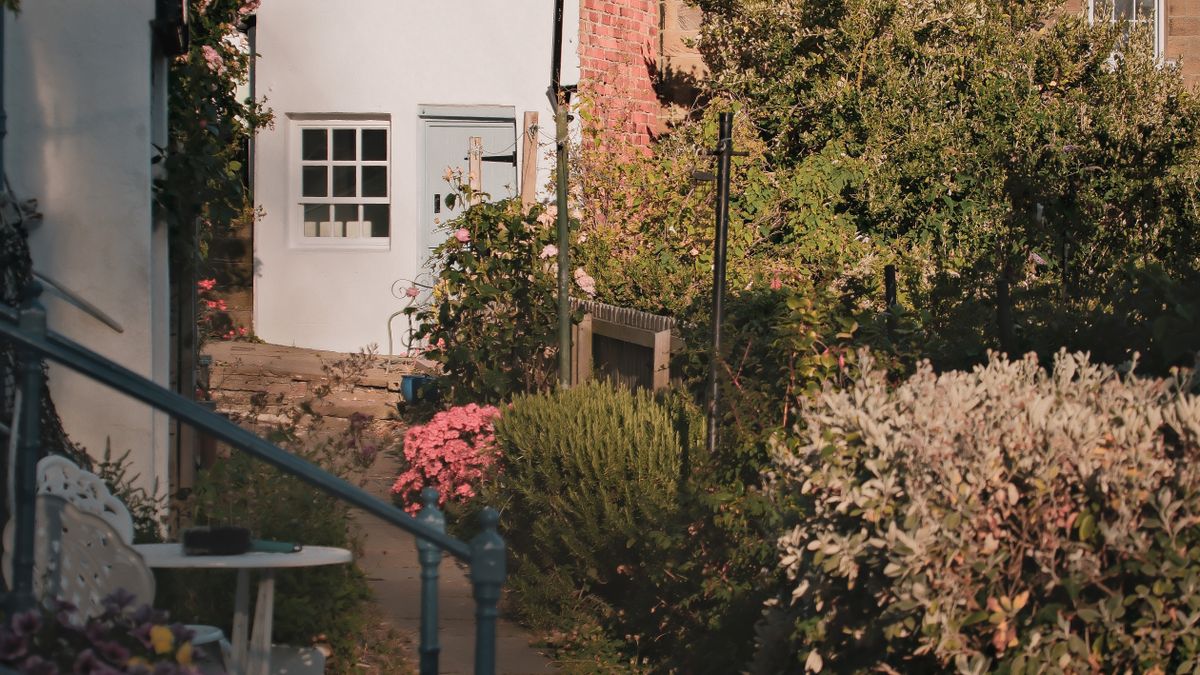
In a small garden, every square foot of border is doing three jobs at once: it is structure, it is colour, and it is habitat. Bare soil between plants is the enemy here. It dries out, it invites annual weeds, and it leaves the plot looking threadbare for half the year.
The answer is layered planting. A backbone of evergreen shrubs gives you something to look at in January. Herbaceous perennials push through in spring and carry the colour through summer into autumn. Bulbs slip into the gaps before the perennials have even woken up. Stack those three layers together and the border looks after itself far better than any single row of bedding plants ever could.
For a border around three metres long, three or four well-chosen evergreens is plenty. Choose them for shape and foliage first, flowers second — the flowers are a bonus, the leaves are the workhorse.
Plant at roughly their final spread so you are not digging them out in three years. If the gaps bother you, fill them with perennials rather than squeezing the shrubs closer together.
The trick with a low-maintenance border is to choose perennials that flower for months, not weeks, and that hold their shape without staking.
Geranium 'Rozanne' will flower from June to the first frost and smother weeds as it goes. Salvia nemorosa 'Caradonna' gives you deep violet spires over grey-green foliage that stays tidy. Nepeta spills over the front edge and the bees adore it. Add Hylotelephium 'Herbstfreude' for late colour and seedheads that stand through winter, and a few Verbena bonariensis for airy height that never needs staking.
Plant in groups of three or five rather than ones and twos — it reads as a designed border rather than a jumble, and the plants knit together faster to shade out weeds.
Bulbs give you months of interest for very little money and no maintenance at all. Work them in between the perennials in autumn, and mark the spots with a discreet cane so you do not skewer them in spring.
As a rule of thumb, plant each bulb at two to three times its own depth. Toss a handful across the border and plant them where they land — you will get a far more natural result than spacing them out with a ruler.
Once the layers are in, mulch is your best friend. Spread five to seven centimetres of well-rotted compost or bark over the whole border in early spring, keeping it clear of stems and crowns. That single job will halve your weeding for the year and lock moisture into the soil through summer.
Resist the urge to cut everything back in October. Seedheads feed the birds, hollow stems shelter overwintering insects, and the skeletons of perennials catch frost beautifully. Leave the tidy-up until late February or early March, just as the new shoots are breaking. Only newly planted things need watering beyond their first two seasons — after that, dense planting and mulch do the work.
Once established, this border asks for perhaps a day's work a year. In late winter, cut back the perennials and mulch. In spring, divide anything that has outgrown its space and top up the mulch around the evergreens. Through summer, deadhead the salvias and geraniums to keep them going, but leave the sedums and alliums for the birds. In autumn, plant your bulbs and any new evergreens while the soil is still warm.
Then, in the depths of January, when everything else in the garden has given up, you will have scent from the sarcococca, structure from the pittosporum, and the first green noses of snowdrops pushing through the mulch. That is the whole point of layered planting — a border that looks after itself and still has something to say in every month of the year.

Hi, my name is Anthony kuber. I am artist and fashion designer.
I love to travel and writing blogging.
Your email address will not be published. Required fields are marked *
Software Developer & Writer
Hey, I'm Diva, a developer and writer blending code and creativity. I'm driven by a deep curiosity and a relentless pursuit of excellence. Join me as I craft digital solutions and captivating stories.


